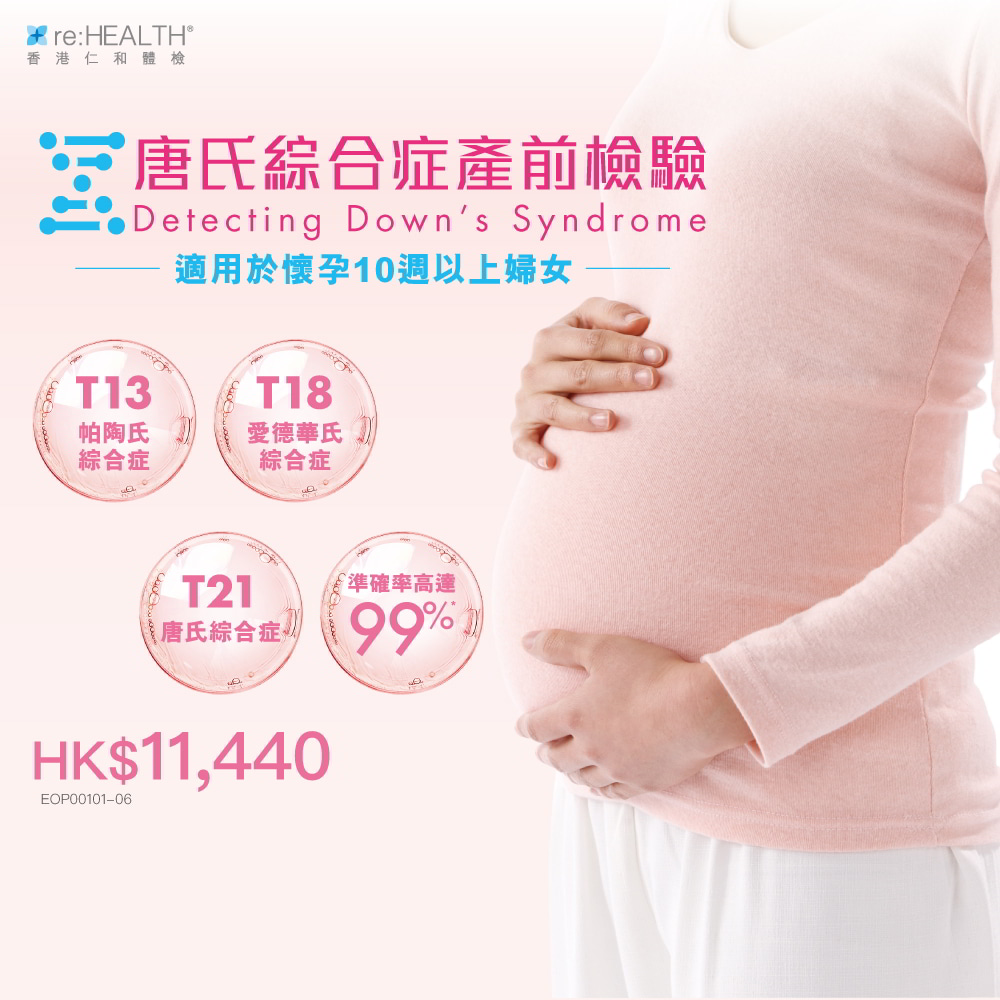
Down syndrome is a genetic condition that caused by the presence of an extra copy of chromosome 21 in a baby’s cells. It usually causes some level of learning disability, certain physical characteristics and chances of additional health problems such as heart defects with varying severity. Down syndrome occurs by chance at conception and there is no evidence that anything done before or during pregnancy causes the syndrome. About 1 in 700 pregnancies will have the chance to carry a baby with Down syndrome and the probability increases with the pregnant woman’s age. Antenatal screening for Down syndrome can help identify the condition before birth.
NIPD Zplus is a non-invasive fetal chromosomal aneuploidy detection technology. The NIPD Zplus test only requires 10mL blood sample from the pregnant woman at 10 gestational week to extract the cell-free DNA of the fetus. Through next-generation DNA sequencing technology and bioinformatics analysis, it detects Down syndrome and other genetic syndromes without any risk to the fetus or mother.
Health Check Item and Category
Trisomy
Trisomy (Single Fetus Only)
Sex Chromosome Aneuploidies
Trisomy 21
Trisomy 18
Trisomy 13
Trisomy 9syndrome
Trisomy 16
Trisomy 22
Turner Syndrome
Klinefelter Syndrome
Triple X Syndrome
XXY Syndrome
Register Now
Terms and Conditions: 1. To enjoy the above items, you must first become a member of re:HEALTH. 2. Registrants must provide their identification number for appointment and verification purposes. 3. Purchased items are for the registrant's personal use only and cannot be transferred. 4. The online exclusive price is only applicable when purchased through this website with full payment completed. 5. The above items are only applicable for one person and can be enjoyed only once; they cannot be exchanged for cash or converted into other products and services. 6. Customers should clearly understand and agree to the services and content arranged by the company before proceeding with the service. 7. re:HEALTH reserves the right to amend or terminate this offer at any time without prior notice. 8. In case of any dispute, re:HEALTH reserves the right of final decision.
FAQ
According to the Department of Health, about 1 in 700 pregnancies will have the chance to carry a baby with Down syndrome, and the probability increases with the age of the pregnant woman.
People with Down syndrome experience congenital physical, cognitive, and language developments that lag behind those of typically developing individuals.
Slower Learning Ability: Most individuals have mild to moderate intellectual disability. However, with appropriate learning opportunities, they can learn self-care, communicate with others, and even hold jobs. Additionally, they are often passionate about music and dance, and enjoy imitating others.
Weaker Social Skills: Nevertheless, when provided with opportunities to interact with others, they can effectively acquire social and interpersonal skills.
They also typically share the following physical features:
Flattish back of the head, upward-slanting eyes, and a flat nasal bridge
Small mouth with a relatively thick, grooved tongue
Short fingers and a wider gap between the first and second toes
Generally shorter stature
Tendency toward obesity
You can undergo diagnostic testing such as chorionic villus sampling (CVS) or amniocentesis. Diagnostic tests can accurately detect whether the fetus has Down syndrome or other chromosomal abnormalities. The procedure involves inserting a fine needle into the uterine cavity under ultrasound guidance to collect placental villus tissue or amniotic fluid for chromosomal analysis. Chorionic villus sampling is usually performed between 11 and 14 weeks of pregnancy, while amniocentesis is typically performed between 16 and 20 weeks of pregnancy. Pregnant women who undergo chorionic villus sampling or amniocentesis face a slightly increased risk of miscarriage; compared to women at the same stage of pregnancy who do not undergo diagnostic testing, the additional miscarriage rate is 0.8%.
The doctor will explain to you and your partner the nature of the genetic disease, its impact on the fetus, and the risk to future pregnancies. You can discuss options with the doctor and other support organizations to better prepare for your child’s birth. With attentive care, education, and community support services, children with Down syndrome can lead semi-independent lives. If, after careful consideration, you decide to terminate the pregnancy, you can also consult with the doctor regarding whether to undergo a legal abortion in Hong Kong before 24 weeks of gestation.
No. A negative screening result only indicates a lower risk of Down syndrome; it cannot guarantee that the fetus is free of genetic disorders. A negative test result also does not rule out fetal structural anomalies or other pregnancy-related issues (which occur in about 2% of pregnancies). We recommend undergoing a mid-trimester structural ultrasound scan to check the fetus’s physical structure.
Register Now
Terms and Conditions: 1. To enjoy the above items, you must first become a member of re:HEALTH. 2. Registrants must provide their identification number for appointment and verification purposes. 3. Purchased items are for the registrant's personal use only and cannot be transferred. 4. The online exclusive price is only applicable when purchased through this website with full payment completed. 5. The above items are only applicable for one person and can be enjoyed only once; they cannot be exchanged for cash or converted into other products and services. 6. Customers should clearly understand and agree to the services and content arranged by the company before proceeding with the service. 7. re:HEALTH reserves the right to amend or terminate this offer at any time without prior notice. 8. In case of any dispute, re:HEALTH reserves the right of final decision.